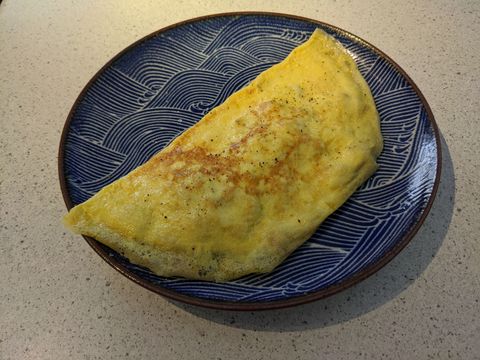
Omelet
March 14 2020 — recipes
An omelet is a great way to make breakfast interesting. It's pretty versatile and can be a good way to use up remaining vegetables you might have in your refrigerator. This recipe intentionally only cooks one side of the omelet, to keep the eggs soft-cooked so the omelet doesn't dry out. (a little like a french omelette)
Ingredients
- 3 eggs
- You can go down to 2 eggs if you don't want a full 3-egg omelet. However, the omelet will be more delicate and easier to tear when you're making it.
- 2 tbsp milk
- Seasoned salt (regular salt is fine too)
- Salt and pepper
- Non-stick cooking spray
- Fillings, diced into pieces
- You can fill an omelet with almost any meats or vegetables you want. You'll get the best effect if you keep a 1:1 ratio (equal amounts) of each filling. Some suggestions:
- Ham and mushroom
- Ham, onion, green bell pepper (Denver omelet)
- Shredded cheese
- Most shredded cheeses are fine. I often use sharp cheddar, but it's up to you.
- 1 tbsp cooking oil
Directions
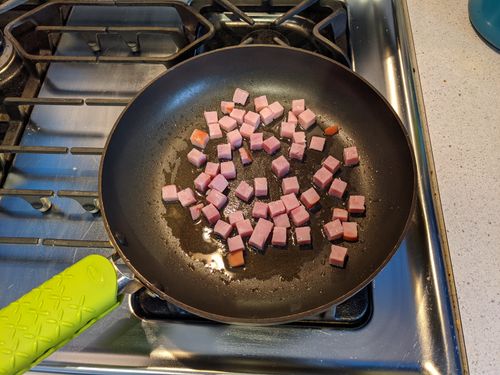
- Heat the cooking oil in a pan (~8 inch non-stick skillet) on medium-high until hot. Start by cooking your meat fillings first. I'm using ham here, and I'm cooking it for a few minutes until the ham starts to brown a bit and get a little crispy.
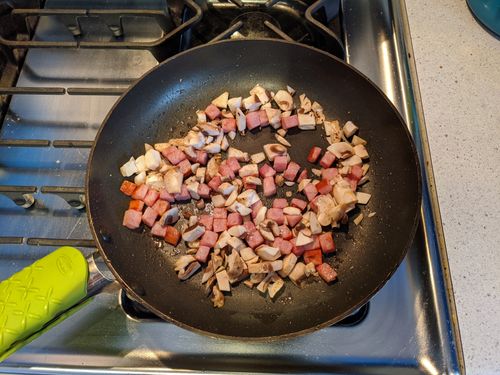
- Add in your vegetables and continue cooking for a few minutes. You want to cook the vegetables a little until they're softened, but you don't want them to turn soggy.
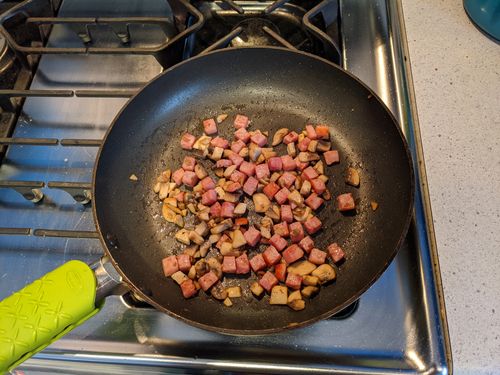
- Season your filling with a little salt and pepper and stir to combine. Remove filling from heat and set aside for now.
- Put the eggs, milk, and a few pinches of seasoned (or regular) salt in a bowl. Beat until fully combined.
- Spray your pan with non-stick spray, and heat on medium-low heat.
- Pour your beaten eggs into the pan. After the eggs are in the pan, tilt the pan slightly and let the egg run around the edge of the pan, so you have a small layer of egg above the normal level of the eggs.
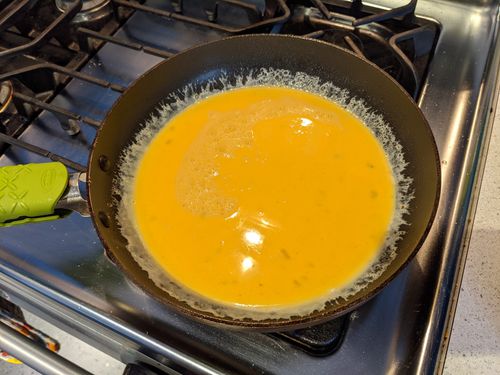
- When the egg at the bottom is about 30% cooked and the layer of egg you made looks cooked, tilt the pan again to make another layer.
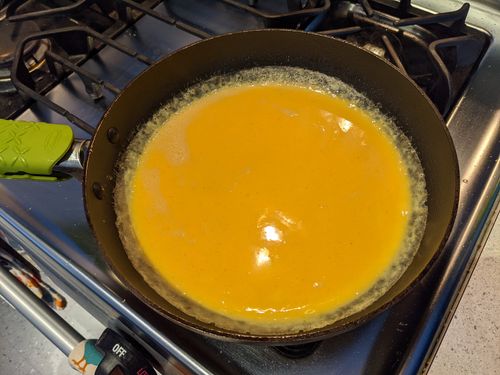
- As the egg reaches about 70% cooked, tilt the pan to make one more layer.
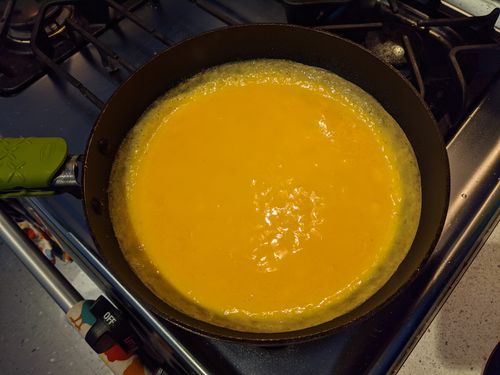
- After this final layer of egg cooks, you'll start to see the layer come off the side of the pan a bit in some places. Run the tines of a fork gently around the pan under the edge of the egg layer to help finish separating the layer.
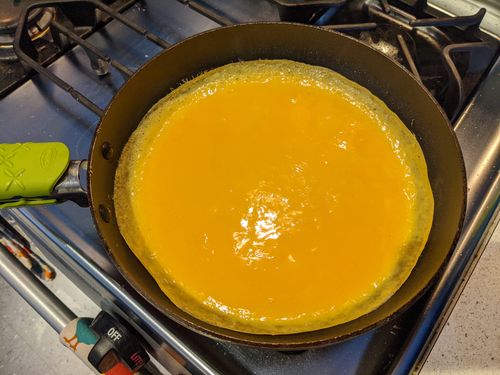
- Add your cheese and filling on one half of the omelet. I usually like to layer cheese, then filling, then cheese, to ensure the fillings and cheese combine together.
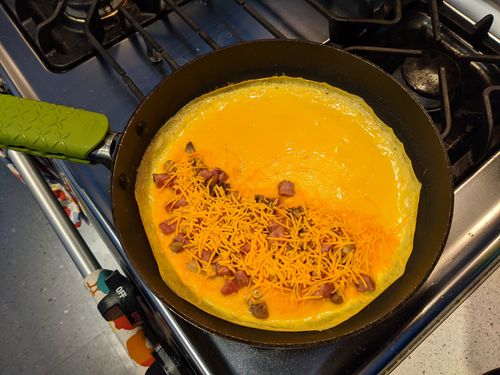
- Gently fold the omelet over the fillings. The omelet can be pretty delicate, so it helps to use a small spatula to fold it over. Don't worry if you tear the omelet a bit (like I did here) - you'll flip it over before serving, so you won't actually see it.
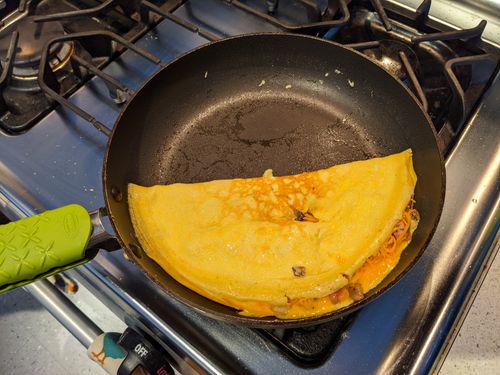
- Add a small amount of water - maybe a couple teaspoons - to the pan next to the omelet. Using the plate you're planning to serve on, cover the pan. The steam you're trapping in the pan will help melt the cheese and seal the opening of the omelet a bit, and will also help warm the serving plate. After the water has evaporated, hold the pan and plate together and carefully flip over so the plate's on the bottom and the omelet is now on the plate.
- If you don't have a plate large enough to cover your pan or don't feel comfortable doing this maneuver without dropping the omelet, you can obviously skip this part and plate normally.
- Season with a little salt and pepper to taste.